Creating a Vegan Wardrobe: The Essentials
This post contains affiliate links
If you would rather listen than read, this post is adapted from this episode of my podcast Catwalk Rebel.
If you’ve read my book Vegan Style, you’ll remember that the very first chapter is about creating a capsule wardrobe. If you're into ethical fashion and especially if you're into minimalism, you might be familiar with this term. If you're not, the concept of a capsule wardrobe was coined by Susie Faux (yep, her actual name - so vegan-friendly), the owner of London fashion boutique Wardrobe in the 70s (the term is said to have been used before then too, but Faux made it a well-known fashion term). The very simple explanation of this term is that it means to have a wardrobe that's pared down to select items – often a limited number of items – that can all pair well with one another. This is meant to make dressing easier and also cut down on the trend-led purchases that we make, thus becoming a sustainable pursuit.
At the time of writing my book, I was very fascinated with the idea of capsule wardrobes. I loved the thought of only owning a select number of garments and accessories, and never having to spend a thought on what to wear in the morning. However, somewhere along my journey, I learned that – and this may be a shocking revelation – I am not a minimalist. At all. I love having clothes to choose from, and they don't all have to go with each other. Why should they? I love to experiment and be playful with my style, and don’t like to limit myself. The flip side of this approach is that I almost never get rid of clothes - if I buy something, it'll be in my wardrobe for a minimum of five years, or until it literally falls to pieces, so things tend to stick around and pile up. I have items that are up to ten years old. So, I don't really have a capsule wardrobe, and I doubt that I ever will.
But while learning about capsule wardrobes, I picked up some principles that I still find very useful today. One of them is having your wardrobe built around certain basic pieces. You might have noted, in fashion magazines or books, those lists of “ten things that every wardrobe has to have”? They're always exactly the same, featuring things like a trench coat and a white shirt - my immediate reaction is often to imagine all the readers of that magazine walking around looking exactly the same. But the things is, sometimes, if you read them right, those lists have a point. If you take the time to perfect the items that make up the backbone of your wardrobe, then getting dressed will be easier, you will feel more confident in what you're wearing, and you'll love your clothes more. This doesn’t meant the exact items in those lists – I just don't like the way a trench coat looks on me, for example. Your own idea of basic pieces - what suits your style and life - will make up your perfect wardrobe building blocks.
For vegans, what this means is mainly learning about fabrics. Those lists in the magazines may not always work for us because many will feature things along the lines of “a high-quality leather bag”, or “a sweater in pure cashmere.” So we've got to be prepared and know our alternatives, but the key takeaways are still worthwhile if we only learn to adapt them to what we need.
Here, I'm breaking down seven items that I believe the building blocks of a good wardrobe and how we can make them vegan – what fabrics to look out for and where to shop for these items.
The Cold-Weather Coat
I thought we'd get the most difficult thing out of the way first. The trickiest of all of them – but in many climates you really need this one. A cold-weather essential that might be more or less warm depending on where you live, but in many areas of the world, some form of coat will be beneficial for at least a portion of the year. For me, buying a coat is such a big, important purchase, as it's meant to last you so many years. I remember I was reading a book on personal style a few years ago, and the author said that it's a good idea to replace your winter coat every year. I remember how strange that sounded to me and that is still some of the craziest fashion advice I have ever heard. All my winter coats have lasted me ages. I had a coat when I bought at Zara in Milan when I was still shopping fast fashion – a structured black coat with military-style gold-toned buttons. I had that coat for eleven years. I finally stopped wearing it in its twelfth year, when the fabric was really giving in. To me, a coat is a long-term commitment, which is why it's even more important to choose wisely.
For a long time and possibly still today, one of the biggest issues with looking for coats as a vegan is that so, so, so many coats out there come with a tiny, tiny percentage of animal-derived fabric. I'm talking about 10% wool, 8% angora, 5% cashmere – so the brand is able to call it “wool-blend” and raise the price. This used to frustrate me so much when I was first transitioning to a vegan wardrobe, and coats are still among the most difficult garments to buy if you don't want animal fabrics, don't want virgin polyester, and value style and fit. I think this is still a big gap in the market, and if a brand comes along that makes beautiful vegan coats that are sustainable and doesn't make them prohibitively expensive, they will have hit the jackpot.
My best tip is to buy your coat second-hand. You can use websites like eBay or Vestiaire Collective, or apps like Depop and Vinted. But going down this route can be tricky and take time, so have patience. Keep looking, keep checking in. I found my perfect coat on eBay - after over a year of searching. So this is not a quick fix.
I've found really good coats in charity shops, but here too, remember to check the label. I once took a coat home before I had read the label, and guess what – it had 20% wool. Some vegans are okay with wearing second-hand wool, leather and other animal-derived fabrics, and I have no problem with that. Choosing second-hand is preferable to buying new, but when it comes to my own wardrobe I just can’t bring myself to wear wool after knowing what I know about the industry. So I ended up taking that coat back to the charity shop. Moral of the story: check the label!
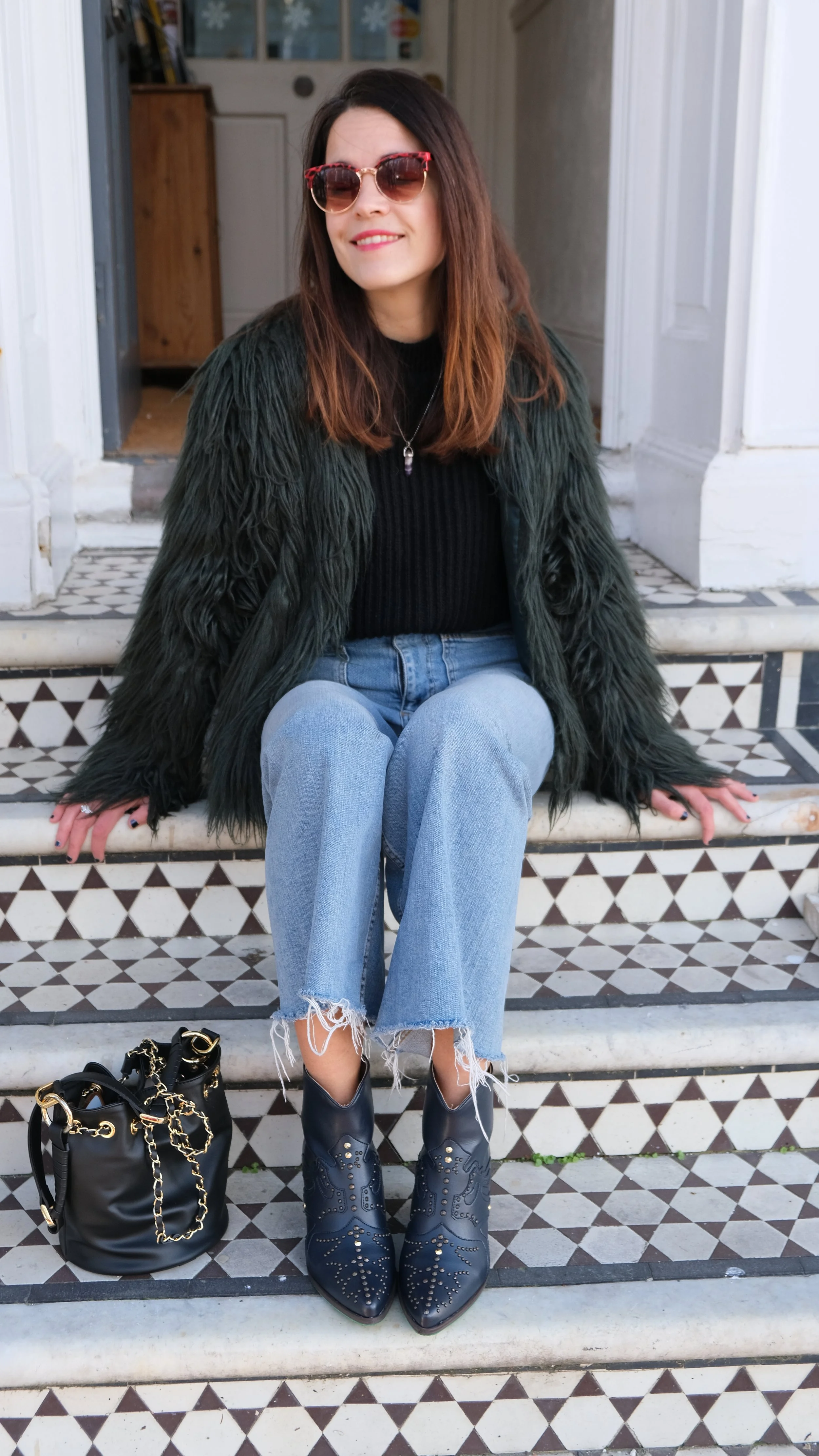
Brands that offer good vegan coats are few but they do exist. Matt and Nat, a handbag and accessory brand from Canada, also offers a small but beautiful outerwear range, often including recycled fibres. The eco-friendly label Jan n'June also offers vegan coats in organic cotton. People Tree is another brand that has lighter mid-season coats and jackets. If you're a faux-fur person – I definitely am – then you’re in luck as there is so much choice. London Fashion Week favourite Shrimps creates high-end coats in a variety of colours and patterns. Jakke London and Culthread are two other UK-based brands that create amazing colourful faux furs with beautiful prints and designs. One of my favourites is Unreal Fur from Australia – in the photo above I am wearing one of their faux furs and I'm constantly stopped in the street and given compliments on it. If you're a fan of puffer jackets, Nanushka has amazing vegan leather puffers and Italian outerwear brand Save the Duck offers puffer coats without any down or feathers. The aforementioned Culthread also offers a cool selection of puffers.
The Everyday Bag
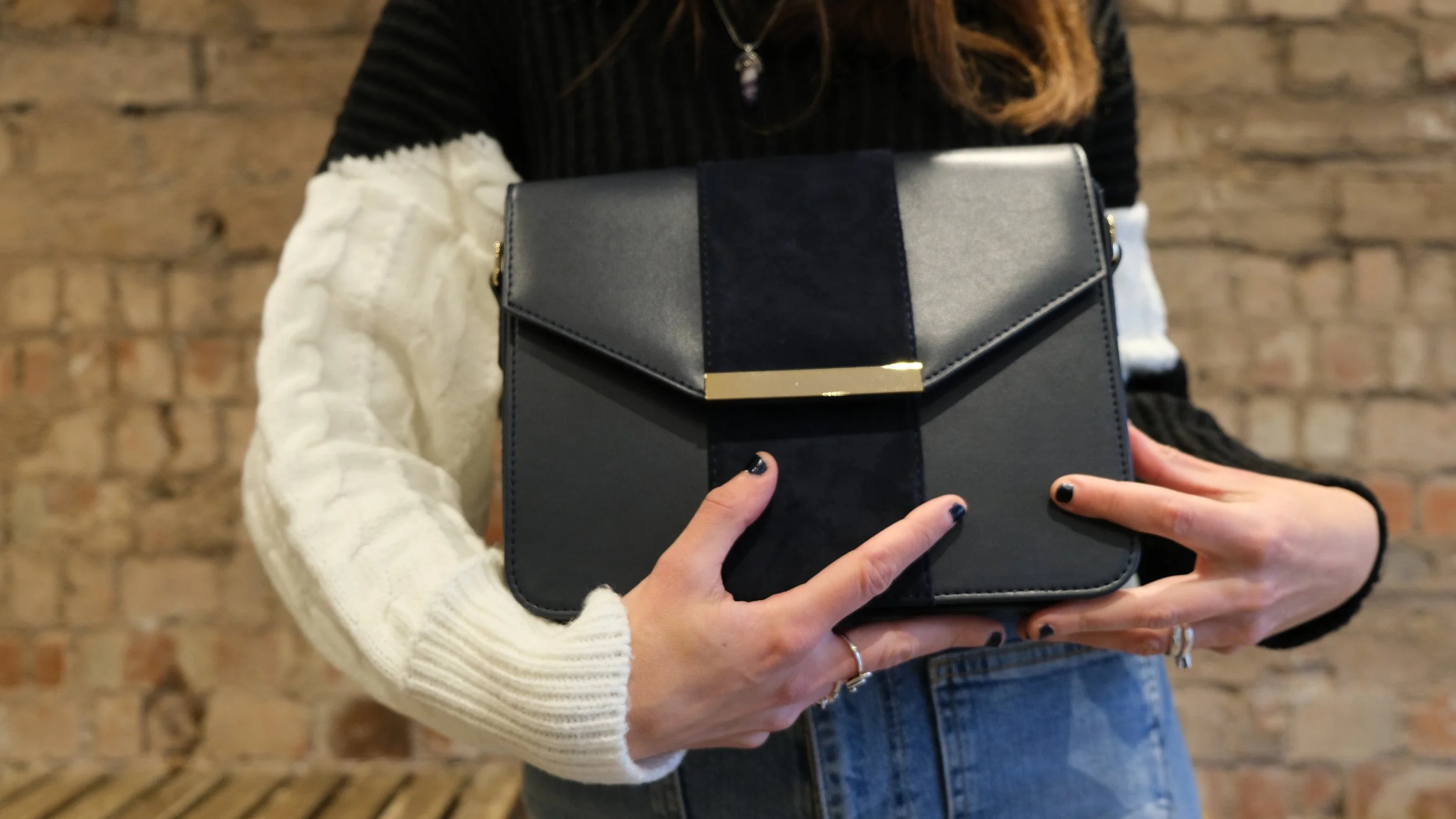
This is one that I would say everyone will benefit from, no matter where you live and what your lifestyle is. You're going to need a really good daytime bag that fits all the essentials and won't break down, but that also looks great with pretty much everything you own. For me, this tends to be either a tote bag or a bucket bag, and it's usually black because that's easiest to match. And it’s got to be a multi-tasker! My husband has gifted me bags like this on a few occasions, and he always tells me to “stop putting cans of beans in there”. But for me, a good bag has to be durable and you have to be able to put stuff in it. This is not your evening clutch that will just fit a lipstick and pair of keys! This is an everyday item that's meant to be resistant and sturdy.
You will find this on the magazines' lists as “a good leather bag” and that specification that it has to be leather always makes me roll my eyes. But vegan leather today has come such a long way since the days of “pleather” bags. Today we have leathers made from pineapples, mushrooms, cactus, apples, and corn - serious progress.
When choosing a bag, pay attention to size: will it fit everything you carry around on a daily basis? Secondly, the colour. Even if you're not as big on black as I am, you have to be sure that the colour is something that will match easily with your wardrobe and be easy to incorporate into your outfits. And lastly, make sure that the material has some weight to it, isn't too flimsy and will withstand a lot of use.
My favourite vegan brand for everyday bags is Matt and Nat – they re one of the original, longest-standing vegan leather bag brands and they specialise in really simple designs, wearable colours and real durability. I have two Matt and Nat bags, both second-hand, so who knows how much life went into them before they ended up in my wardrobe, and the material still looks good. I know several people who have had theirs for years. This brand does tend to use PVC - one of the most toxic materials in fashion - so check the label or buy it second hand. Another great vegan leather bag brand is LUXTRA – a London brand which works almost exclusively with plant-based leathers made from pineapples, corn, cactus and apples. Their bags are high in quality as well as kind to the planet. Another one I love is Alexandra K, a Polish brand that also works with plant leathers such as apple leather. Their bags are perfect for the office as they offer many classic designs and clean silhouettes, which is what we want in a daytime bag.
The Wear-Them-Everywhere Ankle Boots
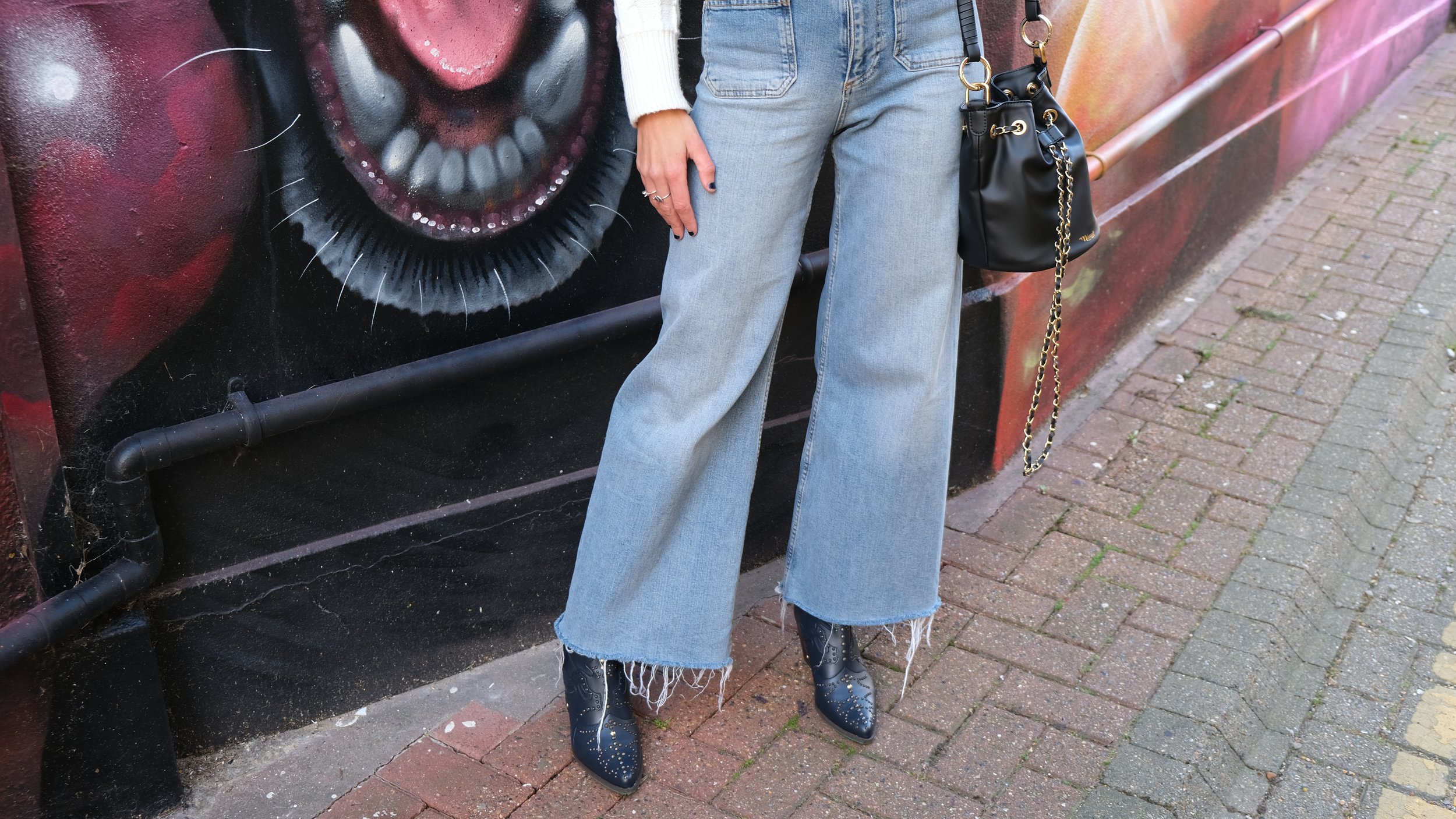
This is my footwear of choice. If I had to choose one type of shoe to wear for the rest of my life, it would be a chunky-heeled ankle boot. I challenge you to find one style of clothing (aside from maybe ball gowns) that an ankle boot will not go with. This will be the hardest-working shoe in your wardrobe: you can wear it with dresses, jeans, more formal trousers, skirts, anything. A good pair of ankle boots will elevate your outfit – literally as well, as it adds some height – and look effortlessly cool in any season.
As with bags, look out for materials. Shoes specifically will often have a label, often on the inside, to state the material composition. If you see a symbol that looks like a cowhide, that means that the shoe is made from animal skins. But if instead you see a symbol shaped like a diamond or a net, that stands for non-animal materials. I'm not sure why this is only done for shoes and not other leather or faux leather items, but that's a good way to know.
There are a few brands that have really good vegan ankle boots. Zette Shoes is an Australian brand that has a variety of styles. I have a pair of their Evie boots with a thick sole and a chunky heel, and I wear them all the time. French brand Good Guys Don't Wear Leather also does the ankle boot really well, as does Will's Vegan Store, a UK brand that started off as a footwear label but now also sells other accessories as well as apparel. I buy most of my shoes second hand and ankle boots are very easy to find on online second-hand marketplaces. Shoes are also quite simple to shop online: if you know your size, chances are that the shoe will fit.
The Versatile Jeans
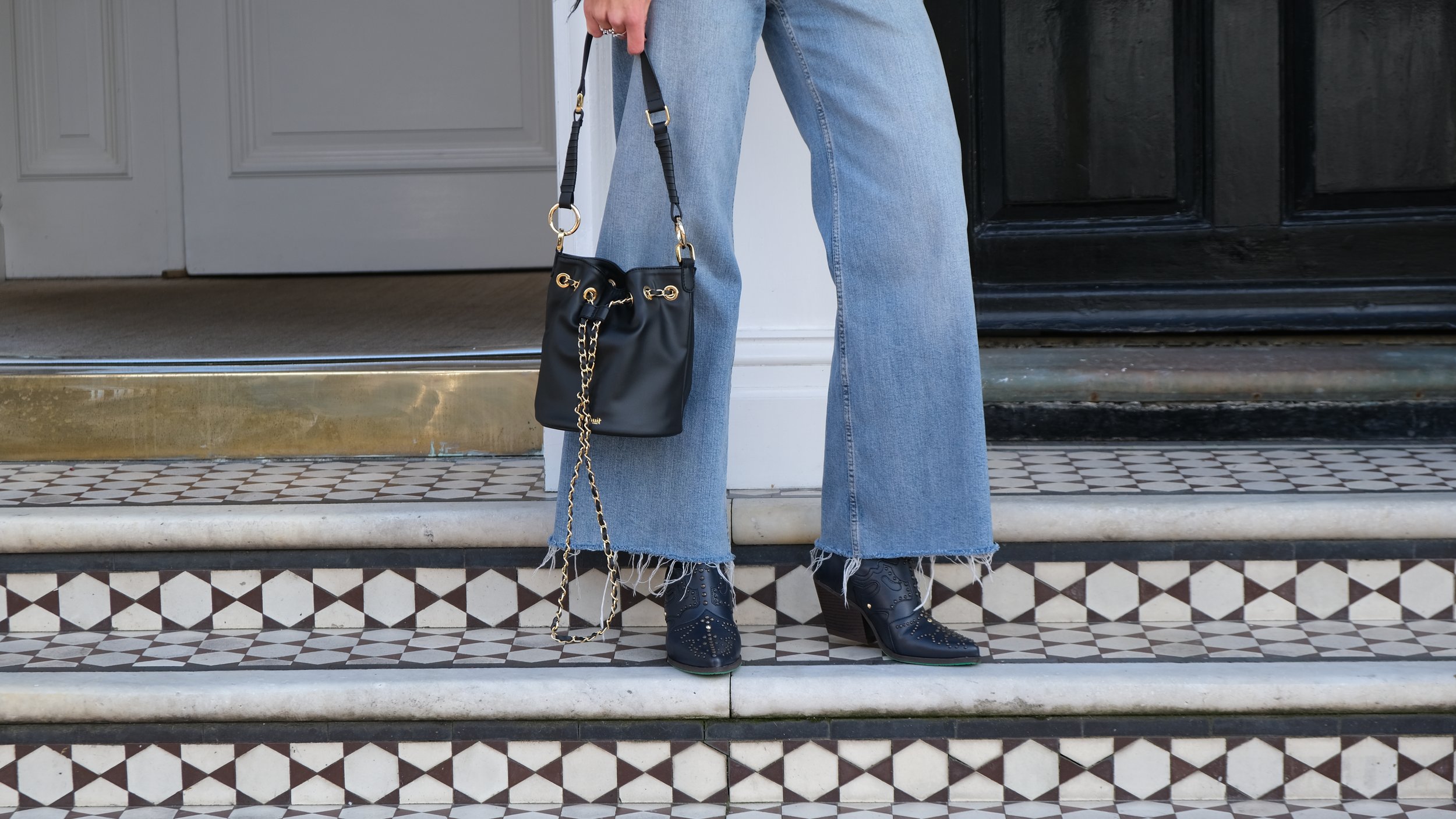
That is not always the case with the next item on the list: the beloved denim, a true wardrobe icon. This is perhaps the one item that almost everyone has in their wardrobe. I don't know anyone who never wears jeans, and with good reason – jeans are an effortless classic. You can wear them to work, on the weekend, in daytime or evening – jeans are the ultimate everyday staple. Most jeans are vegan by default unless they have that annoying leather patch on the back (the denim equivalent of the 8% wool in coats). If you're unsure, get in touch with the brand and ask – this will also send a crucial message that consumers are interested in vegan designs and this small detail actually makes the jeans not vegan.
Jeans are made from cotton. Try to get organic cotton where you can (I wrote about this here), and check what the brand's human rights approach looks like. The cotton industry is rife with modern slavery and cotton that isn't organic uses a lot of water and pesticides. Some brands that offer eco-friendly, consciously made jeans are MUD Jeans, Nudie, Monkee Genes, and Kuyichi.
Jeans can be quite difficult to buy online, as there's a considerable chance of them not fitting right. I've had both good and bad luck with buying jeans on Depop and Vinted, and I'm also lucky enough to have a husband who can help shorten my jeans (he's just incredibly handy and can fix pretty much anything) as the problem for me is always that jeans are either too big in the waist or too long. I have a tiny waist and short legs, so very often, jeans take some tweaking before they fit me. But that's okay - sometimes you might buy something second hand and then tailor it, and that will be worth it.
The Street-Style Sneakers
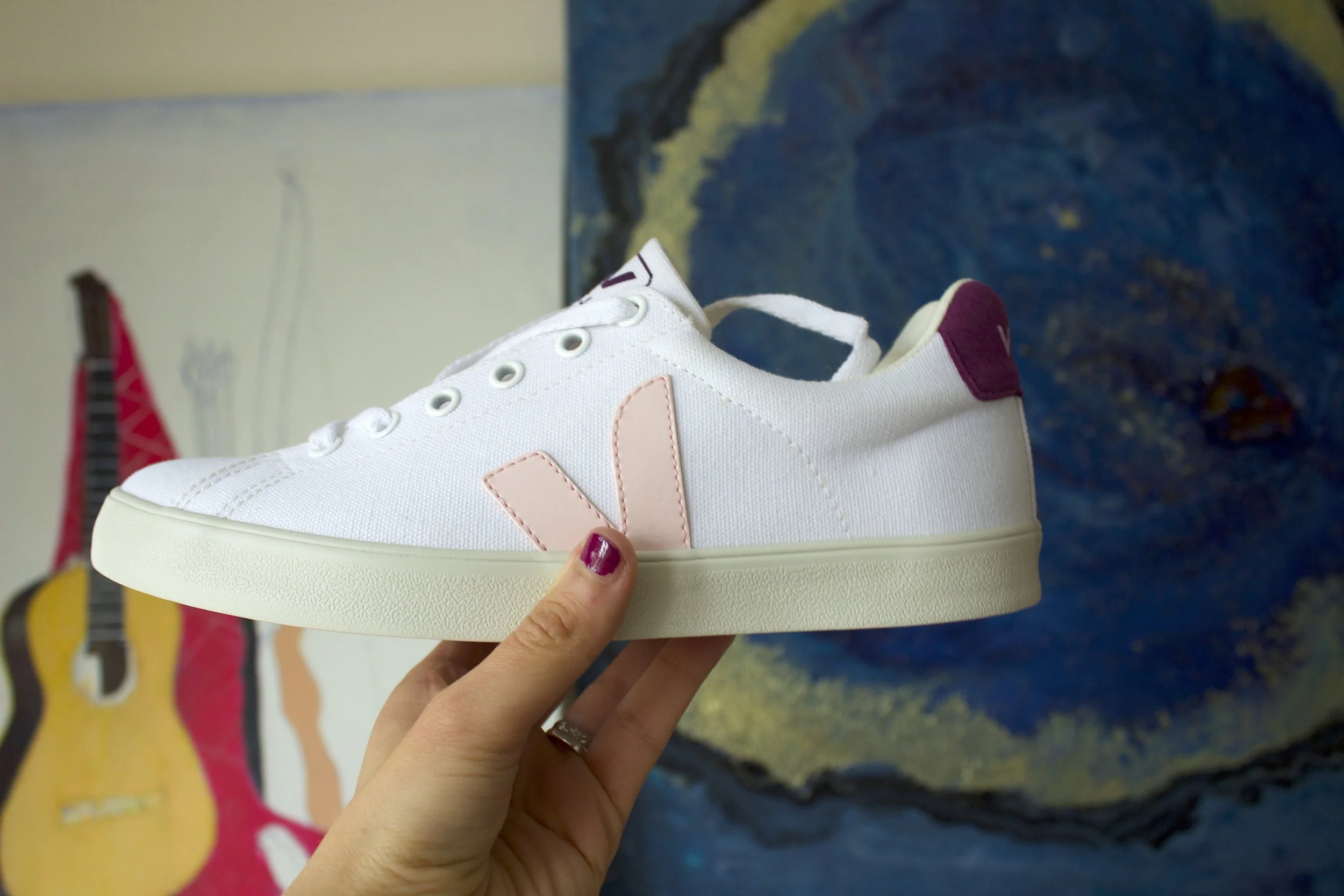
The next item on the list might be something that in fact goes very well with jeans. This is one item that I personally haven't worn much of throughout my life. When I was still in that phase of not having found my personal style yet, I believed that sneakers were too casual for my look and that they would make me look less elegant and less fashionable. Boy was I wrong. Depending on how you style them, sneakers can add so much to an outfit. I changed my mind about this when I went for a job interview at a fashion company and the person interviewing me was wearing a suit with sneakers. She looked so cool and so well put together. I realised sneakers didn't necessarily have to look sporty: they could have any vibe you wanted to give them, and they could make many outfits instantly cooler. My favourites today come from Veja – they aren't a fully vegan brand but they have an awesome vegan range, and I wear mine to death. They're starting to fall apart and I'm definitely buying a new pair when I have to. Other brands I recommend are Will's Vegan Store, Humans are Vain and Ration.L – all vegan brands. But perhaps my biggest personal favourite right now is NAE - a Portuguese eco-conscious brand focusing on shoes and accessories. Their designs are long-lasting and often incorporate recycled materials.
The Kind Knit
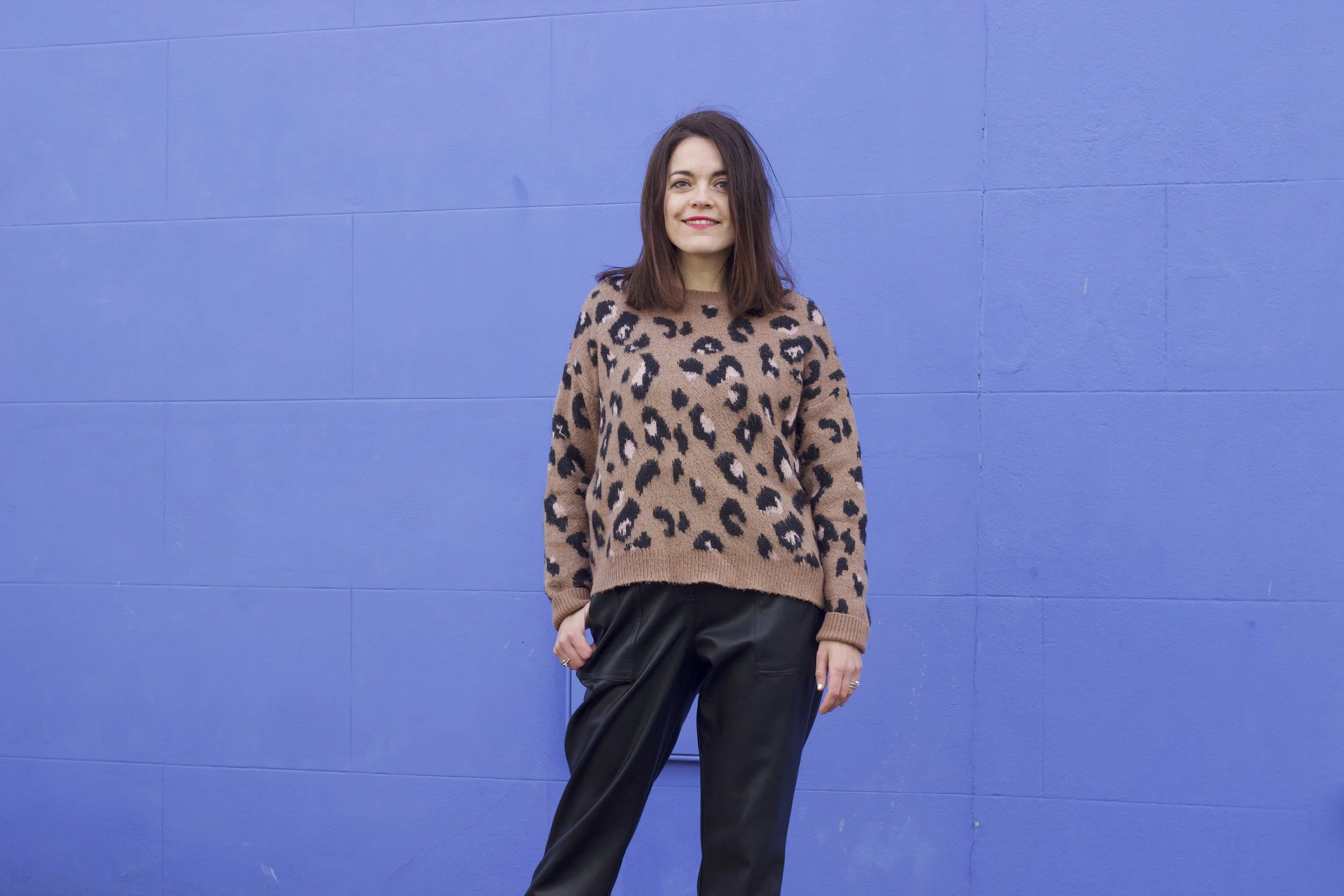
This next one is something that comes into my mind when I am asked what I find difficult about vegan fashion. I don't find wool-free knits particularly difficult today, but I definitely did in the past. I've grown up in a cold climate and knitwear was always a must-have in my wardrobe growing up. In some of the countries where I've lived, you need to own an arsenal of sweaters. Here too, I'd say choose organic cotton where you can, otherwise opting for secondhand knits, which is often my choice. If you come across any of the more innovative options such as hemp knitwear or a design featuring bamboo fabric, do try those out as they can be very eco-friendly, especially hemp, which is one of the most sustainable materials in fashion. My second-hand sweaters last me eternities - I have sweaters from almost ten years ago and they're still going strong. But if you want something new then I'd recommend Will's Vegan Store once again, along with People Tree, which has great organic cotton jumpers. Ethical fashion pioneers KOMODO does great things in organic cotton. Jakke London are a faux fur label, but their knits are absolutely next level - I remember their Free From Wool collection from a few years ago, which was a great way to get the conversation going when it comes to the ethics of wool.
The Tough-Girl Jacket
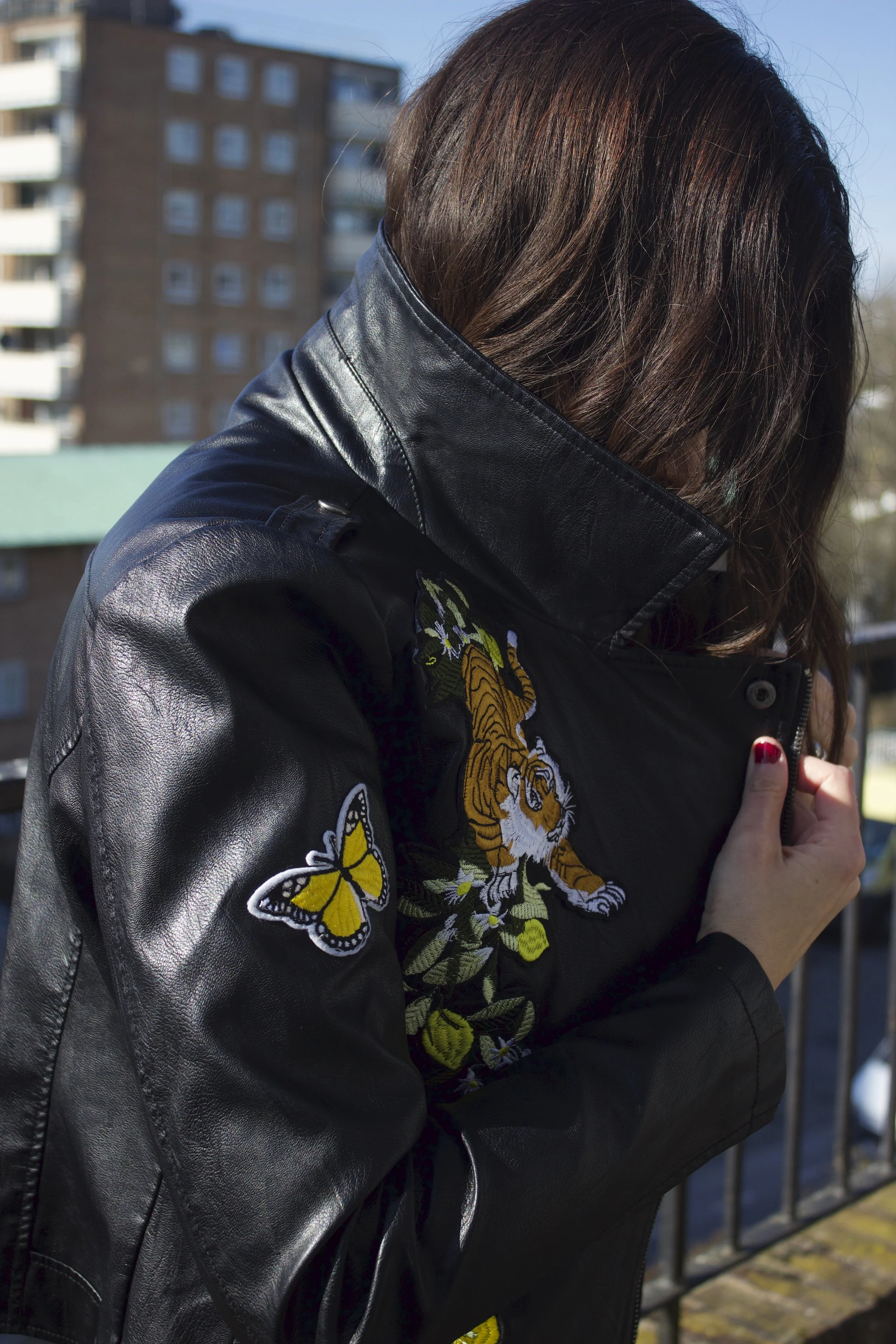
What I like to team with my knitwear is one of my biggest favourites, my one must-have item – I would call this my desert-island garment, it's so significant to my style: the biker jacket. I'm obsessed with good biker jackets, which of course through the years has been at odds with me not wearing leather. I remember once a good friend wanted to buy me something for my birthday. We were walking around shops in Milan and I saw this beautiful pale pink biker jacket. It was gorgeous and I really wanted it, I could envision all the amazing outfits I could wear with it. Then I saw that the label said “lambskin” and I just remember recoiling from it – my hand automatically retracted as soon as I saw that. To me lambskin isn't a word that stands for quality and status, I see none of that. I just see a lamb. A cute, white, fluffy, curly little lamb playing in a field, nuzzling your hand. My immediate urge is to protect this curious little being. Wearing their skin just seems barbaric and not something I want to be a part of at all, so I ended up leaving that jacket in the store. Instead, I got a pleather jacket made from some synthetic, that was probably awful for the environment – which, let's remember so is the lambskin jacket, leather is one of the biggest environmental hazards in fashion. But today we can wear leather jackets made from fruit – high-end designer label Altiir offers jackets in pineapple leather, while US-based label Dauntless focuses on biker jackets and offers long-lasting designs high in quality.
Today I have three vegan leather jackets, all second hand. My everyday one comes from from vegan brand Noize that I wear constantly. I also own one that is bright red and came from a charity shop, and then there is the one in the photo above, from a vintage store. This jacket is probably my single favourite garment in my entire wardrobe. If my house was on fire and I could save one item of clothing, that's without a doubt what I would save. It's so me – it's my style in a nutshell, and I'm so happy I found it.
Of course, when it comes to my own wardrobe, I buy pretty much everything second hand - and am always blown away at how much choice there is, even with the “restriction” of shopping vegan only. But that is a topic for another post!
Photos by David Camilli